Cards On The Table

I recently spent a really interesting day at my local college on a “Preparing for Professional Practice’ course. The day was full of good ideas, and I may well blog a summary at some point. For now – I want to focus on one particular question raised, that being ‘What’s the most important part of your marketing strategy?’

Much discussion about websites, flyers, and galleries ensued. Once we were all talked out, our tutor asked, ‘Who here has a business card?’ There were seven of us in the room, and only one of us could answer this question positively. Our tutor suggested that the humble business card is that most important part of the marketing strategy.

Initially I felt underwhelmed. I can’t remember the last time I ordered business cards, they’ve become somewhat unfashionable in many business circles I currently move in. The idea stuck in my head, and over a few weeks, it stayed stuck – niggling me. I decided to explore the niggle, and found myself looking through loads of my work, searching for images which might look good as a business card. I chose, rejected, rechose, rejected, again and again and again. In the end, I settled on five images, each of which tell a story as well as making a visual statement.

You’ll find all these images, and a variation of the one on the bottom right, elsewhere on the blog, so I won’t retell the stories here and now, but next time you see me, ask me for my card, and I’ll happily tell the tale behind the image.

I used Moo to print the cards which are made with super thick 600 gsm paper with a lovely blue seam sandwiched in between the layers.

Will the humble business card become the most important part of my marketing strategy? Time will tell.

The Art of Trust

I recently attended the ChangeBoard Future Talent conference. This was my third or fourth year at the event – and I found it the most interesting and enjoyable one so far. A really interesting, artful day.

The central theme for the day was ‘How we can evolve as individuals and organisations to meet the challenges of the future workplace?’ The word trust hung heavy in the air beforehand, and as part of my preparation for the event I asked people the question, ‘When you see and hear the word ‘trust’, what images come to mind, please?’

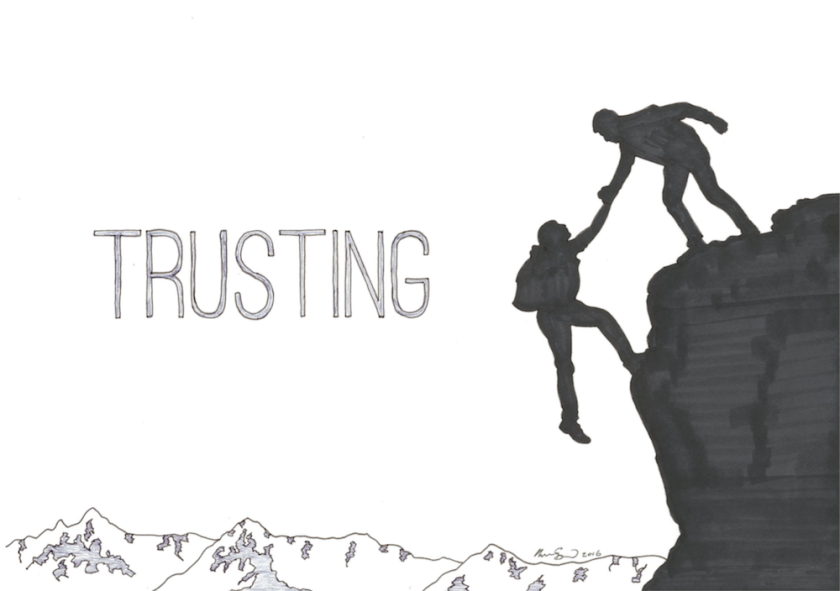
The answers were plentiful and varied. Several folk commented on trapeze artists, mountaineers and the like. I drew something similar to represent trust for a client back in 2016, though now I look again – you could just as easily title this piece ‘foolish’, depending on your point of view!Trusting

A particular idea which caught my imagination was the connection between trust and risk, and of the need to give trust.

Tim Casswell wrote: ‘Trust and risk are interrelated. Trust is the most efficient form of human relationship. Trust is something you dare. Something you choose. It changes everything about the way you relate to someone else. It tends to be transformative. People who are trusted find it very hard to break that trust. We are taught to fear and we learn to fear. So most relationships are based on fear and caution. “Trust is a pure transparent sea too deep to fathom cautiously” Trust isn’t something earned. It is something given. One of the most wonderful affirmations in the world. Once upon a time it was how we all lived. Trust is a revolutionary act. And as for images? Some words are worth a thousand images. Maybe trapeze artists?’

Usha Chadha responded:I relate to this strongly Tim. You give trust to strangers as much as you do to people close to you. Every time I buckle up on a jet plane my life is entrusted in a complete stranger to get me to my destination safely, but I trust in the system that the pilot will have been through training and passed his/her qualifications. We all have to blindly trust and depend upon societal elements to function, and when there’s a problem we get frustrated (or die if in a plane!!!), because our trust & faith in them gets broken. So the image of being blind-folded is one I see when we talk of trust.’

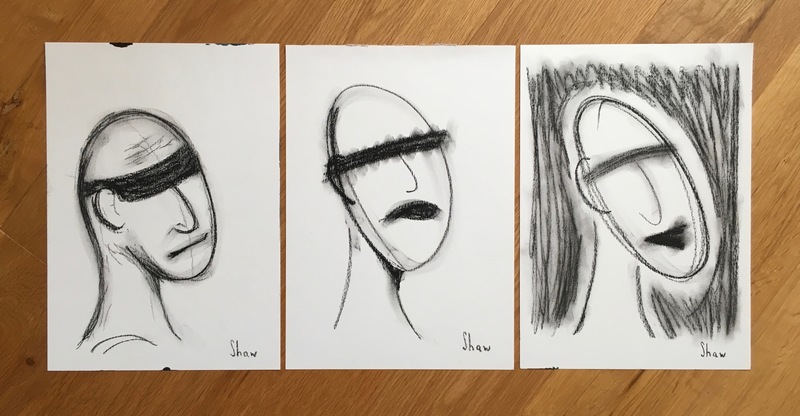
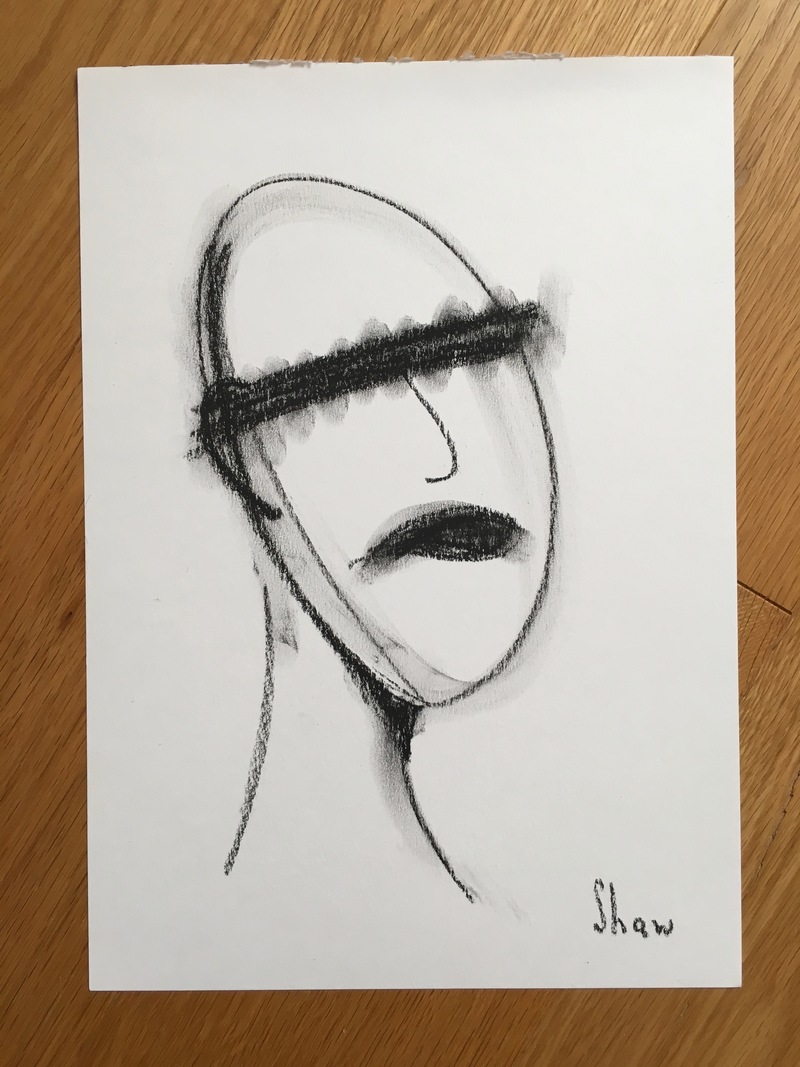
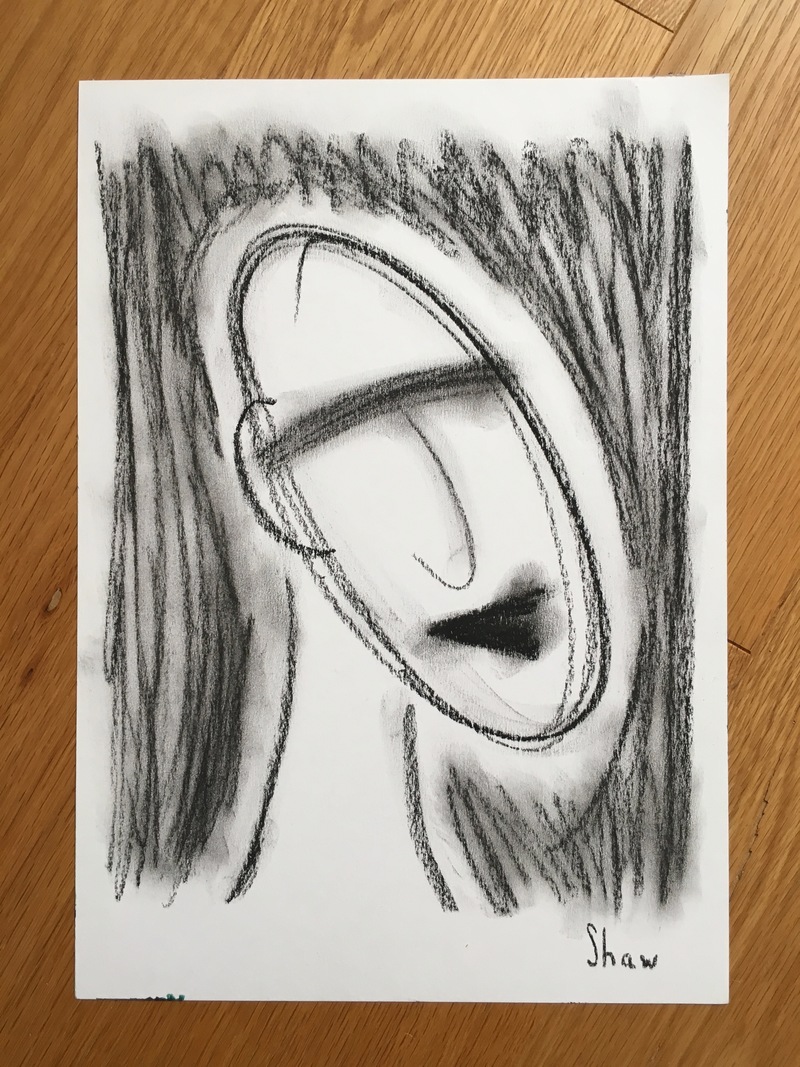
Usha was not the only person to offer the idea of being blind-folded, and I found this really struck a chord, and stuck with me. I made several sketches – and as you can see, I struggled to illustrate the idea of being blind-folded as a positive/trusting thing!

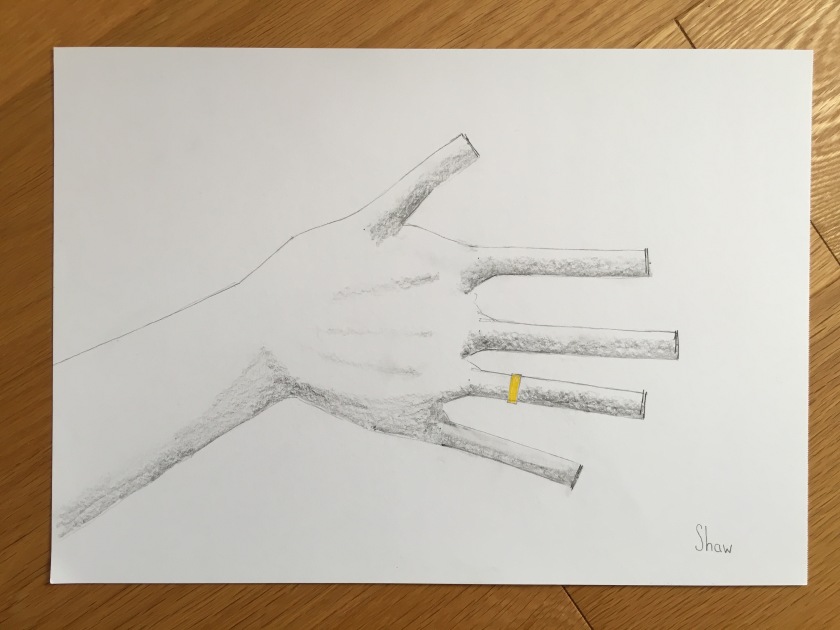
Sitting in the auditorium on the day, the following sketch emerged. It signifies trust as a symbol, in this case I was thinking of my own wedding ring.

IMG_4081

Part of what interests me about this trust work, is how people respond to an invitation to think in pictures. I never cease to be impressed with the diversity and richness of responses people kindly offer to seemingly simple requests. More to follow, soon…

Egyptian Goose

Recently I’ve begun tuning the free art project to more closely reflect what is going on around me, both locally and seasonally. I had a couple of failed attempts drawing some blossom related pictures this week, and with time running out, I started to panic a little. What to draw? Then I remembered – there is a family of Egyptian Geese in Beddington Park, two adults and four young.

This small group of birds has attracted a good deal of attention among people in the community, with regular photos appearing on Facebook. I’m not very good at drawing – it’s something I need to practice much more, so as part of that practice, and in a departure from my usual style of work – this week I’ve drawn an Egyptian Goose.

IMG_4041.jpg

I started using a very muted palette of pencils, and the drawing was just too feint. I’ve worked in some ink (fineliners) and some heavier pencil work. Is it any good? I’m not sure. It was a challenge, that I do know, and that’s part of what this project is about, the challenge.